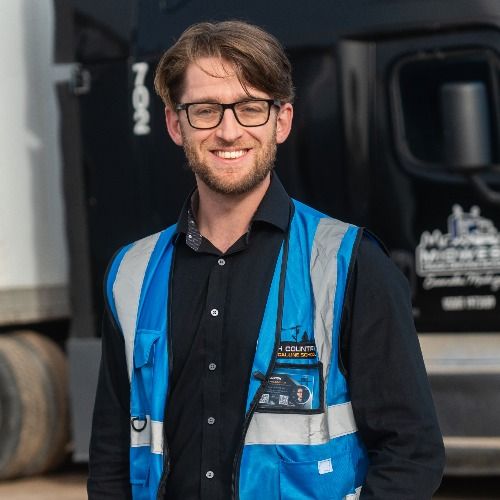
Taking A Huge Pay Cut To Become A Lineman
If you're trying to get into a trade right now, you've probably gotten the same advice everyone gets. Be patient. Take what you can get. Get some adjacent experience first, stay close to home, wait for the right opening. It sounds like the responsible thing to do.
Cole Martinsen took that advice for four years. He finished line school in nine months and then spent four more doing everything except line work — telecom, gas, a desk job doing electric design — and every one of those jobs paid him well to stay put. He'll tell you it's the thing he'd take back. When the opening finally came, getting in meant dropping ten dollars an hour and standing next to guys who were miles ahead of him.
He's topped out now. This one is for anybody sitting in front of the same choice he was: the answer to "should I wait until I'm ready" turns out to be expensive, and he can tell you exactly how expensive.
DISCLAIMER: all discussions regarding earnings and earning potential are demonstrative. Individual earnings are dependent on experience, region, employer, as well as market conditions.
WHAT WE GET INTO
- Whether taking a safer job to "get experience first" actually gets you in — or just moves the start line.
- What to do when the only opening available is a step down in pay, and how fast it comes back.
- How long the path really takes, start to finish, from somebody who isn't selling you anything.
- What happens to your paycheck every six months once you're inside an apprenticeship.
- Where a journeyman tops out — the actual number, not a range someone rounded off.
- Whether you can count on the overtime, and why he doesn't count on his.
- The trap your first big paycheck sets for you, and what it looks like from the inside.
- What to do when you don't know something on a job site and everybody's watching.
- Who this trade isn't for. He's specific, and it comes down to a tape measure.
ABOUT COLE MARTINSEN
Cole is a journeyman distribution lineman in the Twin Cities metro who came up the long way and is the first to say so.
He also built US Trade Route, a free site that answers the question he kept getting from friends' little brothers and cousins: how do I actually get into this? It's how-to guides and pay information by trade and by state — aimed squarely at the gap nobody filled for him when he was seventeen.
🔗 LINKS
Check out US Trade Route: https://ustraderoute.com/
Listen wherever your get your podcasts: https://built-in-the-midwest.captivate.fm/listen
Midwest Truck Driving School: midwesttruckdrivingschool.com
North Country Heavy Equipment & Electrical Line School: https://ncheschool.com/
Submit your Questions: https://webforms.pipedrive.com/f/6WfGT9X1zlYC6WvssJqfWxOOkvVa1AjzqgnAIIHOq70WWiNo5czEWXpBMqxVTW7UST
💬 CONNECT
Email: marketing@midwesttruckdrivingschool.com
Facebook: https://www.facebook.com/CDLMidwest
Instagram: https://www.instagram.com/midwesttruckdrivingschool/
Transcript
That first year of it being kind of rocky, was there ever a point where you thought about quitting?
Speaker B:It took like a $10 pay cut to get into this.
Speaker B:And it's like, what, what were you thinking?
Speaker B:My whole first year there, I was behind.
Speaker B:I'll be the first to admit that.
Speaker B:I had a lot of catching up to do compared to a lot of people.
Speaker B:It was hard for me and it, it showed.
Speaker B:Everyone's there to make money, everyone's there to go home, and everyone wants, wants you to perform better because it benefits them.
Speaker B:If everyone works smoothly together, that's the best case scenario, right?
Speaker B:So if they're taking time out of their day for what they're doing, to slow down, to show you something, it's worth listening and retaining.
Speaker A:If you're thinking about a career in the trades and you want to know what employers actually look for, what the work is really like, and what nobody tells you before you get started, you're in the right place.
Speaker A:Built in the Midwest features conversations that'll help you figure out if this path is for you.
Speaker A:Cole Martenson here, he's a journeyman lineman, and I'm going to be grilling him a little bit.
Speaker A:We, we don't know exactly where this is going to go, but we're going to peel back what it's like to enter the field as a journeyman lineman, what it took to become an apprentice, and what that period looked like to get to where he is now.
Speaker A:So, Cole, thank you so much for joining us today.
Speaker B:Yeah, thanks for having me.
Speaker A:My pleasure.
Speaker A:So take me back.
Speaker A:Where were you when you first sort of decided that lineman was what you wanted to do?
Speaker B:Well, like most people, I got pushed towards a four year degree and I had no idea what I was doing.
Speaker B:So I went and did it.
Speaker B:I went for business.
Speaker B:My parents told me I was going for monkey business, which is what it ended up being.
Speaker B:And I was there for like four months, I think it was, and it wasn't going anywhere.
Speaker B:I felt like I was wasting a ton of money going just to have fun with my friends, and I started looking into it.
Speaker B:I had some friends when I was in high school.
Speaker B:Their whole family was lineman, his brother, his dad, the whole thing.
Speaker B:So I got to looking into it, thought, you know what, I'll give it a try.
Speaker B:They make it seem like it's fun.
Speaker B:So I ended up applying to a school about an hour from my house and got into it that way.
Speaker B:And I mean, like everybody else that tries to get into the trade, you know, you saw the cool helicopter video, you're like, I could do that.
Speaker B:That looks like fun.
Speaker B:Turns out it's not all like that, but it looked, it looked interesting.
Speaker B:It looked like something fun to do.
Speaker B:And I got into it that way and I ended up showing up the first week.
Speaker B:I mean, I wasn't, I wasn't scared of heights, but I wasn't like a big fan.
Speaker B:But, you know, you commit to something and you get that first week that you go there and they have you just do up downs on a pole and you go up 6ft back down, 12ft back down.
Speaker B:And we got to the 12ft one.
Speaker B:And I remember I was like, you know, we're kind of committed now.
Speaker B:We're in this.
Speaker B:So, I mean, it's.
Speaker B:You don't, if you're, if you're thinking about it, but you're kind of on the fence and you're like, I'm not a big fan of heights.
Speaker B:I'd still give it a try.
Speaker B:You can kind of work past that.
Speaker B:But that's about how I got into it.
Speaker A:Yeah.
Speaker A:So did you go to a straight to like a hell week or did you go to a school first?
Speaker B:No, I went to a school first.
Speaker B:So I went to a nine month.
Speaker B:I had.
Speaker B:I had kind of a backwards path.
Speaker B:I got what everyone calls the golden handcuffs.
Speaker B:I got roped in.
Speaker B:Nothing against it, if anyone wants to do it.
Speaker B:I think it's.
Speaker B:There's a lot of good careers you can do in it.
Speaker B:I went right from line school to a telecom job because I was told, like a lot of people are that this will help you, this will help you.
Speaker B:And I ended up working there for a year and then I got hired into a big metro company doing gas work just to get my foot in the door.
Speaker B:I did that for a year.
Speaker B:Then I was an electric designer for a year at the same company and just kept trying to work my way towards getting into a groundman spot and eventually got there.
Speaker B:But I mean, my route took me four years, which hurt me a lot during.
Speaker B:When I got back in because I hadn't been to line school and what, four years?
Speaker A:Yeah.
Speaker A:Was that.
Speaker A:So the, I'm sure the thinking of the time was like, well, this is.
Speaker A:It was a stepping stone.
Speaker A:It's, you know, on the way to getting that position.
Speaker A:But in hindsight, do you feel like it was kind of trying to play it safe?
Speaker A:Like what?
Speaker A:You know what?
Speaker B:Yeah, I tried to play.
Speaker B:I tried to play it safe and I wasn't open at the time, which honestly one of my Bigger regrets is that I wasn't willing to go on the road.
Speaker B:I wanted to stay around my house.
Speaker B:I wasn't willing to go travel and do all that, which if, if I could redo it, that is one thing I wish I would have redone because it hurt me in the end and it hurt me coming into the apprenticeship.
Speaker A:I think that's a really interesting point to just focus on for a second because there are those that enter any industry and when they have sort of, I guess, requirements, if you'd kind of call it that, of how they want to get into the industry and kind of the constraints they are putting on.
Speaker A:Well, I want to do it, but only if I can do it this way.
Speaker A:I want to stay at home.
Speaker A:I don't want to have to be gone a long time.
Speaker A:I don't want to work.
Speaker A:I want to work for this company, not doing this other kind of work.
Speaker A:I mean, my understanding is this is a pretty competitive industry.
Speaker A:I mean, to what degree can you be picky or do you need to just open yourself up to get started?
Speaker B:If I.
Speaker B:If I were to give anyone advice on it, I'd say do whatever you got to do to get started.
Speaker B:Get a leg up.
Speaker B:Because when I started, there was guys that had been doing a groundman job or something for two years or working in the industry and had a knowledge of it, and they were miles ahead of me.
Speaker B:When I started it all, it honestly just hurt me because I hadn't been to line school.
Speaker B:Everything that you learned there, you forgot about.
Speaker B:By the time you got there, you're already behind.
Speaker B:I would say that if you can get in anywhere, I would start there.
Speaker B:Get as much experience on the job as you can.
Speaker A:So then you finally got an in.
Speaker A:Was that, I assume, as an apprentice?
Speaker B:Nope, I came in as a groundman.
Speaker B:So I had to do my 90 day probationary period and then started the apprenticeship.
Speaker A:Okay, so you'd been working towards that for quite some time when you first kind of got in there and made that move.
Speaker A:If we had like body cam footage of you actually getting in there, we were a fly on the wall.
Speaker A:What was that?
Speaker A:First couple weeks like or first couple days?
Speaker B:It was a transition period for sure.
Speaker B:Like I said, I was behind.
Speaker B:My whole first year there, I was behind.
Speaker B:I'll be the first to admit that I had a lot of catching up to do compared to a lot of people.
Speaker B:And it was hard for me.
Speaker B:And it showed.
Speaker B:There's nothing you can do to say it differently.
Speaker B:It showed that I hadn't been in line school for three years I hadn't been in the industry and there's other guys there that are the same position as you that know exponentially more than you.
Speaker B:So I had to do a lot of catch up.
Speaker B:I got out of the woods on it.
Speaker B:But it was a tough transition period.
Speaker A:What were some of the areas that you were really struggling with?
Speaker A:You had to really kind of over, you know, to overcompensate with?
Speaker B:Well, even, I mean just the basic stuff that you would know like if you came out of line school and you've been working with material and everything, what people are calling it, if you like running a digger truck right away because I mean you come into the industry, that's your job, that's your truck.
Speaker B:At least my experience of it is you're, you can't do anything else, you can't work hot.
Speaker B:That's your job.
Speaker B:That is your, you are the guy setting poles, you are the guy moving all that out, you know, getting everything set up for it.
Speaker B:That's your task.
Speaker A:So for those that are, you know, when you look at the, the difference of those that go for, you know, a four year degree or something, you know, you get your bachelor's or associates or whatever, it might be an entry level sort of job in that industry.
Speaker A:If you wait a couple years, that degree fairly quickly also, you know, it fades from relevance.
Speaker A:But I think there's this maybe a misconception that that is not as true in the trace, things just change a little less quickly.
Speaker A:Is it more from things in the industry changing or is it just a kind of sharpness of the skill?
Speaker B:I would say more of a sharpness of the skill.
Speaker B:It's just like the hands on experience that you have and you retain and remember and then everywhere you go, I mean you're going to work.
Speaker B:People call everything differently, material wise and everyone works things differently.
Speaker B:Every, there's a different way to do it.
Speaker B:At any company you go to, you'll go to another company or another crew.
Speaker B:Even in like the metro areas where you switch shops and whatever you learned there, that is the dumbest thing they've ever seen and nobody should do it like that.
Speaker B:And that's, that's another thing that we do that is a little, it's a little different but it's, it's got a good, the idea behind it is good I think to like switch you up, you work with different guys and stuff.
Speaker B:But it is, that is a hard transition period.
Speaker B:Working with a, you work with a group of guys, you get used to the way that they like material, the way that they like to build stuff.
Speaker B:And then you do a rotation and they're like, what, what, what are you doing?
Speaker B:What is that?
Speaker B:And then you just kind of.
Speaker B:I mean, you just roll with it.
Speaker B:It is what it is, but it's just a, it's, it helps you get exposure to a lot of different ways to do things.
Speaker B:And I think that that's a positive.
Speaker A:Yeah, but if you have, no, if you come in and you have no idea how to do it anyway, then you're going to get turned around.
Speaker A:When there are different ways of approaching the same task or doing or just referencing things.
Speaker B:Yeah.
Speaker A:On site.
Speaker B:Yep.
Speaker B:But even, even on the other end of the spectrum, now that I'm topped out, I'm a journeyman and everything, and you see young guys come in, you see, you can tell.
Speaker B:And it's, it's kind of funny to look back on it now where you can tell the guys, like, they've worked for two different companies, they've been around, they went and saw different things, saw how they do stuff, and they can transition so much easier than the guys that, like, you know, they come in fresh or they came from a different industry, went to lion school and got in, but they don't have the years, like, you know, the time, even six months of working at a contractor or something else that you can tell instantly that they know are way more comfortable doing things, working.
Speaker B:And yeah, it's easy to tell the difference.
Speaker A:Yeah, I'm sure that speed to adaptability and just general proficiency and confidence to, like, all right, I don't know this, but I can figure it out because I know.
Speaker B:Yep.
Speaker B:The confidence to figure it out is a good way to put that, I think.
Speaker A:Yeah, that makes sense because my interpretation or my at least looking into the industry, you don't always know what you're getting into of when something goes down.
Speaker A:It might not break the same way every time.
Speaker A:So you.
Speaker A:To be able to kind of think on your feet and know how to problem solve, you know, in the moment.
Speaker B:Yep.
Speaker B:Every day, every.
Speaker B:You can go do the same thing on paper and it's never the same job twice.
Speaker B:Never.
Speaker B:But that's, that's part of the fun of it too.
Speaker B:It's.
Speaker B:There's no, I mean, there's repetition to an extent, but for the most part, your whole entire career is you're doing something new every single day.
Speaker B:And that's part.
Speaker B:I mean, personally for me and a lot of guys, I think that's one of the perks of the job is you never see the same thing twice.
Speaker A:So just kind of laying out the timeline here.
Speaker A:So you were in line school for nine months and it took about three, four years to get to the groundsman position.
Speaker A:90 Days to apprentice.
Speaker B:Yeah, 90 days to apprentice.
Speaker B:And then it's a four year apprenticeship after that.
Speaker A:Okay, so four years as an apprentice.
Speaker A:I mean, what was that span like?
Speaker A:So you had kind of your trial by fire of getting caught up and getting things, getting your skills resharpened.
Speaker A:Re acclimating to that environment.
Speaker A:I mean, what was that apprenticeship period like?
Speaker B:It was like I said, the first, the first year was rocky.
Speaker B:The first year was rocky.
Speaker B:Getting caught up and everything.
Speaker B:But after you get, once you get transitioned in, you figure out what everyone really expects of you.
Speaker B:And you know, and there's a lot of guys, I've worked with a lot of people that have been absolutely awesome.
Speaker B:I've been very beneficial to my career that I got to work with them and they pay attention to the guys that are trying to show you something.
Speaker B:Is the best advice I can give anyone is if somebody's taking the time to actually give you their advice or the way that they would do it.
Speaker B:There's a reason behind that.
Speaker B:They're showing you because they want you to be better.
Speaker B:And that's, I mean it, it takes a lot to, like, sometimes you got to eat your words.
Speaker B:You know, if somebody shows you the.
Speaker B:For the fifth time, something that you, you, they've shown you it before even, and you're like, but if you keep your mouth shut, it'd just be grateful that someone's taking the time to show you it.
Speaker B:That was another thing that I had, I had a hard time with.
Speaker B:But you know, it's.
Speaker B:Everyone's there to make money, everyone's there to go home.
Speaker B:And everyone wants, wants you to perform better because it benefits them if everyone works smoothly together, that's, that's the best case scenario.
Speaker B:Right.
Speaker B:So if they're taking time out of their day from what they're doing to slow down to show you something, it's worth listening and retaining.
Speaker B:And guys expect that of you.
Speaker A:Yeah.
Speaker A:So from the, I mean, in a first year of it being kind of rocky, I mean, was there ever a point where you thought about quitting?
Speaker B:Oh, yeah.
Speaker B:Oh yeah, for sure.
Speaker B:I mean, I, I took a huge pay cut to come from working in the gas department to work in overhead.
Speaker B: , I think it was at: Speaker B:At 20, 21 or 22 years old, which was good money for then, you know.
Speaker B:And I took a pay cut to become an electric designer.
Speaker B:And then I took another huge pay cut to become an overhead groundman.
Speaker B:So it was just like a steady stream.
Speaker B:And you know, like, you're having a rough day and you're sitting there and you're like, I took like a $10 pay cut to get into this.
Speaker B:And it's like, what, what were you thinking?
Speaker B:But I mean, it all pans out in the end.
Speaker B:It doesn't for anyone.
Speaker B:For anyone that's thinking that, that's like, oh, I can't take a pay cut right now.
Speaker B:It bounces back so fast you don't even notice it.
Speaker B:And you can, I mean, depending on where you work, you can work so much overtime that it cancels out if that's something that's genuinely holding you back.
Speaker B:And I think that's a nice perk of at least working in them.
Speaker B:I mean, if you have that opportunity.
Speaker B:I know that there's smaller shops and smaller co ops that don't offer that as much, but I definitely would recommend the trade to anyone that's actually interested in it.
Speaker A:Yeah.
Speaker A:So just kind of level setting for this may vary depending on where someone is.
Speaker A:But coming in at a groundsman for 18, 20 an hour roughly, or no,.
Speaker B:Now, I mean in our area, I think it's 20.
Speaker B:I want to say it's 29 or 30 or something like that.
Speaker B:Now when I started, that was what, six years ago now?
Speaker B: n years ago, that was, it was: Speaker B:So I mean, like I said, from 33 something down to that, that's a, it's a pretty big pay cut, but it's, it's worth it.
Speaker B:I would say like metro area, probably around 30 bucks an hour would be ground rate.
Speaker A:Okay.
Speaker A:And that's metro area Twin Cities over in Minnesota.
Speaker A:We're based in the upper peninsula of Michigan.
Speaker A:We get a lot of people from this region from rural Wisconsin.
Speaker A:So the numbers may be slightly less, but it's also like lower cost of living.
Speaker A:So you'll comparably.
Speaker A:That's a pretty strong starting pay position.
Speaker B:Yeah.
Speaker B:And like I said, it's a short duration.
Speaker B:It's a short duration of time.
Speaker B:When you look back on it, you don't even notice it.
Speaker A:Sure.
Speaker A:So, you know, kind of off,.
Speaker B:You.
Speaker A:Know, if you don't chase down over time and you really kind of max out your hours, assuming Even just a 40 hour week from when you first Kind of took that pay cut to when you became an apprentice.
Speaker A:Did it jump up when.
Speaker A:Once you started the apprenticeship.
Speaker B:Yep.
Speaker B:So every step that you go up.
Speaker B:So the way that ours is structured, it's an eight step program.
Speaker B:Every step that you go up.
Speaker B:So every six months you get a raise.
Speaker B:You're getting a pay bump every six months from the time that you start until you top up.
Speaker B:And it's just, it's a frag.
Speaker B:It's a percentage of journeyman rate.
Speaker B:So it keeps consistent.
Speaker B:It's like a $4 raise every six months or $3 raise, I think it is.
Speaker B:Yeah.
Speaker A:Not a lot of industries offering, you know, $8 every year.
Speaker B:Right?
Speaker B:You're.
Speaker B:Yeah, exactly.
Speaker B:That's.
Speaker B:It's better than the 3%.
Speaker A:So, I mean, we don't have to get exact numbers, but when you max out kind of as a journeyman kind of, where, where do people sit?
Speaker B:In a range, I would say.
Speaker B: I think, I think we're at: Speaker B:We just got our raise.
Speaker B:And I know like over in Wisconsin, like co ops and stuff like that, they're getting high 50s right now, I think is the going rate.
Speaker B:Right about that.
Speaker B:It's up there.
Speaker B:I mean, it's definitely.
Speaker B:It's gone up a lot since.
Speaker B:That's the other thing is it's hiked up in the last, what, since COVID like what, 15 an hour we've gained.
Speaker B:I mean, it grows exponentially.
Speaker A:Yeah.
Speaker A:Does that seem to be slowing down?
Speaker B:I would say that it's leveled out at this point, but I mean, with inflation and everything.
Speaker B:But that seems to be like right in the ballpark of what people are making is, I would say like 60 to low 60s.
Speaker A:Okay.
Speaker A:When you add on the opportunity, if you do have overtime, I mean, what kind of is that?
Speaker A:Double time, time and a half.
Speaker A:How does that kind of play out?
Speaker B:Yeah, so it seems at least where we work, it's Sundays.
Speaker B:Sundays and holidays are double time.
Speaker B:Anything after 8 is time and a half.
Speaker B:So you can, you can stack on.
Speaker B:There's tons of people that stack on.
Speaker B:I mean, we have one guy that makes.
Speaker B: I think he gets like: Speaker B:He works.
Speaker B:That's his thing is he works two full time jobs.
Speaker B:I mean, you can, you can work as much or as little as you want.
Speaker B:That's the kind of, the beauty of the job is that you can write your own paychecks.
Speaker A:Yeah.
Speaker A:So I mean, that might sound appealing for some.
Speaker A:Especially we get a lot of young guys, you know, people that are I would say the range is typically like 18 to 28.
Speaker A:You know, people looking to get in the industry, many of them say some variation of the same thing.
Speaker A:Like first couple of years, I am here to grind.
Speaker A:I, you know, I want to stack cash, I want to buy a house, want to get a car, start a family, and then eventually kind of become like, all right, maybe I'll slow down a little bit.
Speaker A:Yeah, early years, like, all right, you know, storm, work overtime, like this is like seven days a week.
Speaker A:You know, that's what I'm here for.
Speaker A:And then usually to have some ambition of, all right, I'm going to go with the local or I'm going to tear it back a little bit.
Speaker B:Yeah, a lot of guys do that and we get a lot of them that do that.
Speaker B:But it is a sickness.
Speaker B:You get used to those paychecks and it's hard.
Speaker B:It's hard.
Speaker B:There's a lot of guys that have a hard time turning it down, but it's available to you.
Speaker B:But I mean, like I said, there's tons of guys that work in the area.
Speaker B:They work 40 hours a week and they're comfortable with that.
Speaker B:It's whatever you want it to be.
Speaker A:Right.
Speaker A:Well, you kind of shared right now we're recording this on a Monday.
Speaker A:You just shared that you picked up a shift last night, on a Sunday, into the evening and you got a couple hours of sleep.
Speaker A:I mean, what is that?
Speaker A:I guess for your sake, is that kind of a pretty typical sort of.
Speaker B:Yeah, I don't like to miss the double time calls.
Speaker B:That's, that's hard to pass up for me.
Speaker B:But no, it's, I mean, yeah, you get, you get used to it.
Speaker B:It's a, it's a different way of functioning.
Speaker B:But I mean, I typically try to work two to three nights a week.
Speaker B:If Sunday, if I get a call on Sunday, I'll work that.
Speaker B:And we work 16s, so I mean, I'm normally looking at what, 16, probably 24 hours overtime a week.
Speaker B:Just on average is kind of where I like to say ballpark.
Speaker B:But I mean, we're building the house, so I don't really, I don't have as much of a choice as some people do.
Speaker A:Sure.
Speaker A:You have a strong incentive to keep that income.
Speaker B:Yeah, I have, I have a good incentive.
Speaker A:Yeah.
Speaker A:So I mean, 16 hours a day, I mean, there are people that they look at eight hours a day and they're like, oh, so much, you know, a long day, 10 hours a day.
Speaker A:Oh my God, you know, exhausted.
Speaker A:How are you working 16 hours a day and give me a sense of like, what are those 16 hours doing?
Speaker A:Because I imagine you're not just sitting on the, you know, on the tailgate of a truck somewhere and hanging out.
Speaker B:No, no, we're not doing that.
Speaker B:Well, first of all, it's, it's a lot easier when you like everyone you work with.
Speaker B:I work at an awesome shop.
Speaker B:I love the guys I work with.
Speaker B:Some of them are my best friends.
Speaker B:And it, it doesn't seem like work when you have fun at it.
Speaker B:And we have a lot of fun, so it's, it's enjoyable.
Speaker B:And I mean, like, my fiance gets mad about it and she always, well, you're just hanging out with your friends.
Speaker B:I was like, you can't be mad at me because I' fun at work.
Speaker B:Just because I enjoy the people I work with, you can't get mad at me about it.
Speaker B:But it's.
Speaker B:No, it, it makes the days go by so much faster when you get to work with people that you actually enjoy working with.
Speaker B:And I think that's one of the coolest things about this job is it's, it's a bunch of people.
Speaker B:Like everyone for the most part has like the same general personality.
Speaker B:You know, you can get along with just about anyone in the industry that I've ran into, and I think that helps a ton.
Speaker B:It doesn't seem like you're working 16 hours.
Speaker B:It's.
Speaker B:It's easy.
Speaker B:Easy.
Speaker B:When you're up in the air and you can just have a conversation.
Speaker B:I mean, you're still at work, you're still working, but you can just have a conversation.
Speaker B:You know what the other guy, I mean, you spend.
Speaker B:When you start doing the math on it, you spend more time with these guys than you do your own family.
Speaker B:Most of us at least.
Speaker B:I mean, you spend a lot of time with these dudes.
Speaker B:I know their kids, I know their kids names.
Speaker B:I know what they've got going on.
Speaker B:You know, you're asking them, what, what's going on with this?
Speaker B:How was this?
Speaker B:You went to the cabin this weekend?
Speaker B:It's, it's not bad.
Speaker B:It's.
Speaker B:If you get into a good company like that, it's a lot of fun.
Speaker A:Yeah.
Speaker A:So what is the, I mean, the actual work you are doing?
Speaker A:I know, I mean, you never do the same job twice, but I mean, you know, what's, what's it typically look like?
Speaker A:What got you called in last night?
Speaker B:We had.
Speaker B:I got called in for.
Speaker B:There was a big silver maple that fell down and ripped.
Speaker B:I Think it was three spans, the secondaries down and a bunch of house services.
Speaker B:So we had to go out there with the tree crew.
Speaker B:It was backyard so we could get.
Speaker B:We got a 550 in there to get it all hooked back up.
Speaker B:And it's.
Speaker B:I mean, it depends on the day, but I mean, on outages, like right now we're in a big heat storm.
Speaker B:So there's a lot of outages with that, with everyone using all the AC and coming home at after work and turning everything on and just.
Speaker B:It can't.
Speaker B:We're not, we're not built in the city for that load.
Speaker B:But yeah, I mean, it depends what you get called out on stuff like that.
Speaker B:Burnt down wires, bad transformers a lot.
Speaker B:It changes all the time.
Speaker B:And it's.
Speaker B:I mean, it's a crapshoot.
Speaker B:You're rolling the dice, you might have one that's not bad.
Speaker B:And then you get out to one and you're like, oh, I should not have answered the phone.
Speaker B:But it's all part of the fun.
Speaker A:Yeah, A lot of the guys I've talked to have this sort of pride in the work of like, all right, there are people that in summertime, like, their ACs out, their refrigerators out, if, you know, it's up to me to get the power back on and, you know, take care of people.
Speaker A:In winter, it's like they're in their homes freezing until I, you know, a crew gets out there and gets power back on.
Speaker A:Do you feel anything like that sort of, you know, mission that comes with the work, or is it just like, all right, it's just.
Speaker B:No, I mean, absolutely.
Speaker B:When.
Speaker B:I mean, but like in the winter time and stuff like what you're saying right now, and you've been working on it for six, seven hours and you finally get to throw it back in and see the lights come back on.
Speaker B:It definitely makes you feel good.
Speaker B:100 Even last night we had guys sitting out.
Speaker B:You know, you feel you're working, you're sweating and you feel bad because they're sitting there out on their porch sweating too, with you.
Speaker B:And it's like, I'm working, man.
Speaker B:I'm going as fast as I can.
Speaker B:But it, no, it definitely gives you.
Speaker B:It's a sense of.
Speaker B:Sense of enjoyment, I guess I'd say to be able to actually see all the lights come back on for people.
Speaker B:And you're like, well, at least I got that done for them.
Speaker B:You know, your house is going to take forever to eat back up.
Speaker B:But at least I got you something right?
Speaker A:So, I mean, there.
Speaker A:There's some of those pros, like, you're getting paid great money.
Speaker A:You know, you've got a sense of agency over your earning potential.
Speaker A:You can have the fulfillment aspect of it, like, you were providing a valuable service that people.
Speaker A:This is not going away, but let's look on some of the negatives.
Speaker A:You're working potentially a tremendous amount of hours at strange intervals.
Speaker A:What kind of tax does that take on on you, your body, your family?
Speaker A:Like, how do you navigate that aspect of it?
Speaker B:Yeah, I mean, there's definitely a balance to it.
Speaker B:I mean, there's.
Speaker B:There's a lot of days.
Speaker B:I mean, I like, she.
Speaker B:She's like, me home.
Speaker B:I have stuff going on.
Speaker B:We.
Speaker B:We need to get done.
Speaker B:And it's like, well, I. I gotta kind of take this call.
Speaker B:Or we.
Speaker B:Sometimes we get forced.
Speaker B:Like you get forced on a storm.
Speaker B:We were worried about that on the Fourth of July.
Speaker B:But I mean, it's just part of the job.
Speaker B:I mean, it's.
Speaker B:It's a juggling act sometimes to get everything done.
Speaker B:But I mean, you just gotta.
Speaker B:Sometimes you gotta step back and think about it and be like, do it.
Speaker B:Do I need to take the call out?
Speaker B:Do I need to go in on it?
Speaker B:And you gotta kind of just think about your home life, too.
Speaker B:I mean, you.
Speaker B:Like I said, it turns into a sickness.
Speaker B:You start getting on a roll where you come in on a Sunday, you work all night, you get paid to sleep, then you can come back in for 16.
Speaker B:And you get on like, day three of that, and you're like, you want to keep going because, I mean, you want your check to stack up, but you need to go do something.
Speaker B:There's something that, you know, your family needs, or you gotta take a step back.
Speaker B:You can't.
Speaker B:You can't let it consume you.
Speaker B:It gets to that point sometimes and you just kind of breathe and you're like, okay, I don't need.
Speaker B:I don't need to do this.
Speaker B:I want to do this.
Speaker B:But it definitely.
Speaker B:There's a lot of people that.
Speaker B:It.
Speaker B:I mean, that's what they do.
Speaker B:They work six nights a week, you know, and then the one day they spend with their families, stuff like that, try to balance it out.
Speaker B:But it's a.
Speaker B:It's a juggling act for everyone.
Speaker B:You just kind of got to figure out what your balance point is and what you're trying to make out of the job.
Speaker B:Would be my best advice on it, you know, figure out what works for you.
Speaker A:Yeah.
Speaker A:So just to.
Speaker A:I want to make it really, like, explicit in you do have a fair degree of control over that.
Speaker A:Pending natural disasters and emergencies.
Speaker A:Like, all right, we need everyone because the whole city has no power.
Speaker A:We had some crazy once in a century storm or something, but for the most part, in a typical week, you can decide if you're like, all right, I need to take a step back.
Speaker A:The marriage is suffering a little bit.
Speaker A:I need to put a little bit more energy into that for a week or two.
Speaker A:You have the capacity to do that generally?
Speaker B:Yes, I would say generally, depending on.
Speaker B:I mean, I know the over the road guys have a different setup than we do in a local, but it.
Speaker B:Yeah, for where I work and what I've experienced, you.
Speaker B:You have the ability to be like, you know what?
Speaker B:I'm just not like, this month I'm just gonna.
Speaker B:Jimmy's got a baseball game that you want to go to or something like he's got practice on these days.
Speaker B:It'd just be easier just to be home.
Speaker B:You can 100% do that.
Speaker B:Like I said that before, but there's guys that have made a career out of working 40 hours a week.
Speaker B:They don't like working overtime.
Speaker B:They don't need to work overtime, which all the power to you.
Speaker A:Yeah, I think that's a really big one because there are some trades that we're involved with for over the road truck drivers.
Speaker A:It takes a toll.
Speaker A:There is a commitment.
Speaker A:Everyone who's in the space is like, this is a lifestyle, not a job.
Speaker A:Because you're gone a lot and you don't always have that control of when you come home.
Speaker A:So for the lineman's sake, a degree of that holds true if you're out doing over the road or you're doing storm cleanup, which comes with benefits also.
Speaker B:Yeah, there's absolutely perks that go with that.
Speaker B:Right.
Speaker A:But for those that do have that sort of seasonality approach, all right, there might be a stand of a few years where I'm committing this chunk over the course of you come in, you get entry level, you finish your apprenticeship, you're out, you know, doing this work.
Speaker A:Like you can make great money as a young guy, or you, you know, and save, invest, set yourself up and be able to pull back when you've got things that take over as priorities.
Speaker B:Right.
Speaker A:You got to kind of plan things accordingly and know, you know, what does your lifestyle require?
Speaker A:Because I imagine you've also seen the people that I think you mentioned earlier, the golden handcuffs.
Speaker A:If you start getting used to seeing those checks at a certain threshold, and if Your needs, you know, your expenses are, you know, hitting that number and you're like, you're not building a nest egg or you're not, you know, diversifying that.
Speaker B:Yeah, that's 100% a trap that I think a lot of people fall into is you start getting comfortable with those inflated numbers and you buy the truck, you buy the boat, you buy all that and then all of a sudden you have to be there to work that amount.
Speaker B:That's, that's a scary.
Speaker B:I've, I've tried to avoid that.
Speaker B:I mean, like when I was first starting.
Speaker B:Yeah, it's super easy.
Speaker B:You start seeing these checks that are huge and it's like, well, I can afford to do anything.
Speaker B:And then you start looking at it and you're like, well, I'm paying for a truck, I'm paying for a side by side, I'm paying for a house.
Speaker B:It's like it starts, it starts adding up quick.
Speaker B:So I mean, yeah, I would, I would recommend avoiding that, you know, just because you're making more money.
Speaker B:Still be smart with it.
Speaker B:Have a nest egg.
Speaker B:Be ready to, you know, set yourself up where you don't have payments.
Speaker B:That's the best advice I can give on it.
Speaker A:Yeah, yeah.
Speaker A:Please speak with like a financial professional.
Speaker B:Yeah.
Speaker B:Don't talk to your buddy at work that also has the side by side in the wake boat.
Speaker A:Yeah, yeah.
Speaker A:Please.
Speaker A:Terrible.
Speaker A:Like, friends with family are the worst place to go to for financial advice.
Speaker A:They don't have the right motivation.
Speaker A:Like they want you to.
Speaker A:They will prioritize other things for you.
Speaker B:And like, yeah, anybody, anybody will tell you to buy a boat.
Speaker B:That's your friend.
Speaker B:That is a trap.
Speaker A:Right?
Speaker A:Yeah.
Speaker A:Because they want to have a friend with a boat they don't want to own.
Speaker B:Oh, 100.
Speaker B:That's what everyone says who has a boat.
Speaker B:Have a friend that has a boat.
Speaker A:Exactly.
Speaker A:It's way better.
Speaker B:Yeah.
Speaker B:You don't have to pay for gas or anything.
Speaker B:But yeah, no, it's, it's definitely, it's.
Speaker B:Yeah.
Speaker B:Especially when you, when you don't have a lot of money prior to that and you get into those checks, it definitely, like I said, it turns into a sickness for a lot of people.
Speaker B:And it's, I mean, I'm not saying it's a bad thing.
Speaker B:Do what you want, but I would say stockpile some of it.
Speaker B:You don't have to waste it all.
Speaker B:It all doesn't have to go away.
Speaker A:Right.
Speaker A:Give yourself a fun fund, like put something aside, whatever that is.
Speaker A:And because I think those that do come from, we'll say, humble backgrounds.
Speaker A:Maybe you didn't have a lot of money growing up, Especially as a kid, if you didn't get a lot of the things you wanted and then you have children of your own, there's a very strong tendency.
Speaker A:And then our age, like, all right, I'm going to overcompensate from my childhood and really spoil my kids.
Speaker A:And that can be.
Speaker A:You got to really.
Speaker A:Not to make this into a therapist session, but you got to analyze kind of where that's coming from and where enough is enough.
Speaker A:By all means, indulge a bit, but be intelligent about it.
Speaker A:We're just two guys on the Internet at this point.
Speaker A:Don't ignore us.
Speaker A:If.
Speaker A:If you don't want to hear that, that's fine.
Speaker A:But you're also one injury away from potentially being severely impacted.
Speaker A:So you got to plan for the future a little bit.
Speaker B:Exactly.
Speaker B:And you never know.
Speaker B:I mean, the overtime, I've never seen it dry up, but I've heard from guys that have been there a lot longer than me that it does.
Speaker B:I mean, it can go just like that.
Speaker B:Tomorrow you could come in and be like, yep, nope, we're not working on any more overtime.
Speaker B:We're just doing outages and scheduled work.
Speaker B:And then, you know, I mean, you can't.
Speaker B:I don't ever count on overtime.
Speaker B:It's a nice perk, but I try to live within what my salary is.
Speaker B:Anything extra is just additional money.
Speaker A:Right?
Speaker A:Yeah, I think that's a good approach.
Speaker A:There are some of the.
Speaker A:The detractors of the century.
Speaker A:I think now we've got the good, the bad.
Speaker A:Now how about a little bit of the ugly of this is dangerous work?
Speaker A:I mean, what are some of the ways for people that are maybe looking at the industry, you know, what are some of the ways that this can go wrong?
Speaker A:Have you seen it gone wrong out on jobs?
Speaker A:I mean, what does that actually look like?
Speaker B:Yeah, it definitely can go wrong.
Speaker B:Yeah.
Speaker B:I've been a part of a couple that went poorly.
Speaker B:I don't think I can technically talk about those because they're within.
Speaker B:I don't think we've closed out on those quite yet.
Speaker B:But no, it is scary.
Speaker B:And things do happen whether.
Speaker B:Whether you see it or not, whether you're there or not.
Speaker B:You'll hear about it one way or another through the grapevine.
Speaker B:Somebody knows somebody that something happened to, and accidents do happen a lot.
Speaker B:I mean, not a lot lot, but enough that it makes you think about it.
Speaker B:And I guess if I.
Speaker B:If I Had any advice to give.
Speaker B:If you don't know something and you're not confident in your answer, ask.
Speaker B:Because it's not worth it.
Speaker B:It's not worth.
Speaker B:It's way better to feel dumb than wake up in a hospital and you're burnt, in my opinion.
Speaker B:I mean, a lot of times it's intimidating as a young guy to ask, and you're like, I know this is a dumb question, but I mean, there's.
Speaker B:Nobody wants to see anybody get hurt.
Speaker B:So if you don't know, I would say ask.
Speaker B:That's the best advice I can give you on that.
Speaker A:I think there's an ego aspect, at least in many of the young men that I've met in the industry.
Speaker A:There's.
Speaker A:There is a bit of a character trait that carries through that somehow.
Speaker A:I won't say they're reckless, but they do have a, like a risk aversion level of, you know, they kind of detach from the fact that, you know, they're hanging off a line, you know, 50ft up, and there's kind of a mental space to go to where they separate from the danger and they focus on the task at hand.
Speaker A:But there are.
Speaker A:There is a need for that sort of sense of the danger that, I mean, a few seconds can make a big difference, you know, whether you forget what you're doing and you don't insulate something properly or, you know, you, you cut yourself, you, whatever.
Speaker A:I mean, just even staying hydrated on hot days.
Speaker A:And like, no one wants to have heat stroke on.
Speaker A:On a pole, you know, like, there's so many things that can happen and there's things that aren't even in your control.
Speaker A:You're in a.
Speaker A:Up in a bucket truck and some oversized vehicle clips the, you know, the boom.
Speaker B:And yeah, like, no, there's, there's.
Speaker B:Yeah, there's more than just the electricity aspect of it.
Speaker B:There's a lot of things that come into play.
Speaker B:Cutting tree limbs, that's a big one that I've seen go wrong a lot of times.
Speaker B:And, I mean, I wasn't in a bad spot for it.
Speaker B:But, you know, you think about it, you're like, I could have been standing there.
Speaker B:Like, I could have been 15ft closer.
Speaker B:That would have landed on me.
Speaker B:Just all the things you don't think about that absolutely affect what your safety is.
Speaker B:I mean, the amount of people that I've seen cut their hands and heard all these horror stories about using the skin and knife and slicing their whole forearm open, it's all the little things that you do every single day that end up getting you?
Speaker A:Yeah, every single class we have, somebody usually week one or two, ends up, they gaff out.
Speaker A:They gaff themselves in the calf or the ankle or something.
Speaker A:And.
Speaker A:Well, this is why we say, don't do that.
Speaker A:It happens so quick and it, you know, it's nobody's fault, but by time it happens, it's too late.
Speaker A:You know, you can't.
Speaker B:Yeah, yeah, there's definitely things that come.
Speaker B:I mean, it's just the nature of the job.
Speaker B:It's a dangerous job.
Speaker B:There's a lot of dangerous aspects to it.
Speaker B:And then you tack on all the other things that any other regular job would have on top of that.
Speaker B:And yeah, there's a lot.
Speaker B:There's a lot that can go wrong.
Speaker B:But I mean, yeah, just keep your head on a swivel, pay attention, don't get complacent with things.
Speaker B:And.
Speaker B:I don't know, it's.
Speaker B:One of the bigger things is a lot of accidents I feel like are based on people taking.
Speaker B:I mean, everyone says it's taking shortcuts and stuff, but I mean, like, you know, you're up in there and you're like, oh, I don't think I need.
Speaker B:I don't think I need that much rubber.
Speaker B:I could probably get away with like one hose, one blanket.
Speaker B:And everyone's been there.
Speaker B:Everyone's been there.
Speaker B:I don't care who you are.
Speaker B:You've been in that position where you, you know, I don't think I need to carry all that.
Speaker B:It's just a pain to put all that out.
Speaker B:Just do it.
Speaker B:It's.
Speaker B:It's not worth it.
Speaker A:Yeah.
Speaker B:And I mean, for the most, I, I haven't ever experienced it.
Speaker B:Nobody's gonna make, Nobody's gonna give you a hard time about it, about being overly safe.
Speaker A:Yeah.
Speaker B:There's no.
Speaker B:I, I don't think there's any pride aspect to.
Speaker B:Well, I used less cover up than you did.
Speaker B:Nice.
Speaker B:Good for you, man.
Speaker A:Right.
Speaker A:Everyone wants to go home.
Speaker A:I mean, if every crew is different, I'm sure, but like you said, you spend a lot of time with these people.
Speaker A:You don't want to see, like, you don't want to be the one calling someone's family like, hey, they're in the er.
Speaker B:Yeah, you definitely.
Speaker B:I don't want to make that phone call because I know, I mean, the majority of them, I've met their wives, I know who they live with, I know their families.
Speaker B:I don't want to be the one to make that phone call.
Speaker A:Right.
Speaker B:And I would, I would assume that everyone's pretty much on the same page as that.
Speaker B:Nobody wants to see anyone get hurt.
Speaker B:No one wants to have to make that phone call.
Speaker A:Yeah.
Speaker A:So these are all, I mean, they're just real parts of, you know, of this work.
Speaker A:And I wanted to talk about it because there it gets discussed pretty frequently, I mean, when at least with our students and different schools do their own thing.
Speaker A:And I hope everyone kind of gives that discussion the gravity that it requires because we want everyone safe.
Speaker A:We want long, healthy careers.
Speaker A:So for those that are kind of just feeling out, they're interested in the space.
Speaker A:My understanding is you have a little bit of a side project you started up recently.
Speaker B:Yeah.
Speaker A:Tell us about US Trade route.
Speaker B:Basically, as I, I've had so many people ask me and everyone.
Speaker B:I feel like everyone in the industry has had somebody ask them.
Speaker B:My cousin's brother, son's nephew wants to get into line work.
Speaker B:Like, where did, how does he start?
Speaker B:And my buddy's little brother asked me a couple months ago and was asking me about it and I was laying in bed that night and I was like, there should, like.
Speaker B:I feel like there's nothing that tells people because I mean, like, you know, you start thinking about it, nobody has any real idea on like how to get in.
Speaker B:There's no, like, there's such a gap, I feel like from high school, I mean high school, career changing, veteran, stuff like that, into getting into trades, jobs and what it all requires.
Speaker B:Basically I just wanted to have something that gives, like how to.
Speaker B:Guides on how to get started.
Speaker B:Like, for example, like everyone wants to.
Speaker B:I feel like everyone who's ever gotten into line work has seen the video of the dude on the helicopter doing it and thought, wow, that's cool.
Speaker B:But nobody knows like I didn't know for years how to get into that or what it took.
Speaker B:So I mean like, we basically have how to guide articles that we try to type out.
Speaker B:We try to have a good section for each trade, or I'm trying to build it out as it goes that tells you like, okay, you want to be a helicopter lineman, you need to do this.
Speaker B:What's the difference between a transmission or distribution lineman?
Speaker B:Like where, where, where's the work at?
Speaker B:What are you doing day to day?
Speaker B:What's the difference in that?
Speaker B:You.
Speaker B:The pay guides on how, like what?
Speaker B:I don't know if you had a chance to look at that interactive map that we built that tries to have a little better range on what you're actually making per state, per trade and Basically it's just kind of.
Speaker B:I'm trying to be.
Speaker B:Make a bridge between the high school and like the guys that are just starting out or trying to get into the trades and where you need to go from there.
Speaker B:Pre.
Speaker B:Indeed.
Speaker B:I guess.
Speaker A:Yeah.
Speaker A:Yeah.
Speaker A:Because there's so much.
Speaker A:I mean, you look at everything early scale is going to be like the sizzle videos, like, oh, you know, look how cool it is.
Speaker A:Which, I mean, we are complicit in that too.
Speaker A:Because you want it to look interesting, you want it to feel engaging and like kind of give people a taste of the cooler aspects of it, the visual sort of experiences of it.
Speaker A:But then there's the, all right, what, what do I have to do?
Speaker A:How do, how long does it take?
Speaker A:What does it pay?
Speaker A:What does it legit pay?
Speaker A:Not like the inflated recruiter poster version.
Speaker A:Like, right.
Speaker A:Am I gonna see where I am and what are the actors that go into it?
Speaker B:Right.
Speaker B:Or like even with line work, like the over the road versus working at a local or working union or non union.
Speaker B:Like what?
Speaker B:Because I mean like it's such a vast amount of knowledge and unless you know somebody that's doing it, then you, I mean you, how would you ever know?
Speaker B:You'd never know.
Speaker B:Like I, when I was in high school, I would have never known what alignment makes or what a lineman does day to day.
Speaker B:And I just feel like that there's got to be something in between there.
Speaker B:So you can at least attempt to figure out on your own or at least have like a guide to go.
Speaker B:Like, okay, well I like this aspect of it.
Speaker B:This sounds cool.
Speaker B:Like in this article, I think I'd like to try this.
Speaker B:So what we're trying to do is just roll out that for as many trades as we can and just get a wide, I guess, directory of the different options that you have available to you.
Speaker B:And like what, what do you actually get paid per state?
Speaker B:Because I mean like we talked about on the phone, like when I was in high school, at least when we had like the career day thing.
Speaker B:And it's like, what does a plumber do?
Speaker B:And they're like, well, I don't know.
Speaker B:I know that the runs downhill and paydays Friday.
Speaker B:So I mean like that's about the knowledge that we have of it.
Speaker B:There's a guy down the road who has a van that says something plumbing.
Speaker B:You can talk to him about it.
Speaker B:It's like, but nobody really knows what, right?
Speaker B:I mean like there's so many.
Speaker B:Even with plumbing, there's so many different jobs that you can have in that little realm.
Speaker A:Right.
Speaker B:It's.
Speaker B:Yeah, it's just, it's not just the.
Speaker A:Guy under the kitchen sink, you know, turning a wrench.
Speaker A:Like there is multiple.
Speaker B:Yeah.
Speaker B:What does he do?
Speaker B:He fixes kitchen sinks, I think.
Speaker B:And other than that I'm not entirely sure, but nobody know and nobody really passes it on or show shares where like, what do you need to be certified to be a plumber?
Speaker B:How many years does it take?
Speaker B:It's that sort of thing that I feel like there's just a big gap.
Speaker A:Yeah.
Speaker B:It's just been such a push for so long to have a four year degree that I mean, unless this is just my personal opinion, but I mean, you take it with a grain of salt.
Speaker B:But if you're not gonna be a doctor, a lawyer, why wouldn't you?
Speaker B:I mean, you might as well get into the trades.
Speaker B:It's the only thing that competes.
Speaker B:I mean, the way things are going with like AI and everything and business degrees and stuff.
Speaker B:I mean, I, I have friends, nothing against it, but I mean like you're selling copiers with a four year degree for 50, 60 grand a year.
Speaker B:Like, what do you.
Speaker B:I'm not good at math, but that doesn't math to me.
Speaker A:Right.
Speaker A:Yeah.
Speaker A:There's a whole kind of debate on the value of education for education's sake.
Speaker A:And I think it takes looking at where do you want to be in life and what does it take to get there?
Speaker A:How do you want to actually spend your time?
Speaker A:Because there are people that should not get into the trades.
Speaker A:Line them up.
Speaker B:Oh, absolutely, yeah.
Speaker B:We've worked with them, I've had them.
Speaker B:I mean, we've had people come in that.
Speaker B:It's like, I don't know if you've ever seen a wrench in your life, but it, it's like that you've never been able to be outside and it's crazy that these people have even like made their way to this position.
Speaker A:But there, there are people that we've had come through that even early on, like they're not even to apprenticeship yet.
Speaker A:You're like, I don't know, man.
Speaker A:Like you.
Speaker A:There's a threshold here where this is a competitive field and like, if you can't get to the top of a pole, there's a period where you're battling that anxiety and you come overcoming fear of heights.
Speaker A:But there does reach a threshold.
Speaker A:Like, all right, you've been at this for a while now.
Speaker A:This is like minimum, you got to be able to do stuff up there.
Speaker A:You Got to be able to get up.
Speaker A:What if you had to go up and get somebody?
Speaker B:Yeah, that does.
Speaker B:We have to test for that every year.
Speaker B:That's a real thing.
Speaker B:You do climb whether you think you do or not.
Speaker B:We do still climb.
Speaker B:I mean, not as much as you used to, but I mean, you, you are on your hooks.
Speaker B:There's been lots of days that we've been on our hooks in backyards where there's no truck access.
Speaker B:And that is part of the job.
Speaker B:And you need to know how to do it.
Speaker B:Yeah.
Speaker A:So the, I guess for those that are, they're hearing this like, okay, great, it sounds interesting.
Speaker A:I want to make the money, the lifestyle sounds good to me.
Speaker A:I'm in the path to get there.
Speaker A:Like, all right, I can go to a line school.
Speaker A:I can get the apprentice do apprenticeship.
Speaker A:I can start as a groundman.
Speaker A:I can work my way up.
Speaker A:Getting $4 bumps every six months sounds sweet to me.
Speaker A:I'm into it.
Speaker A:Like, where, at what point, you know, is there anything that should maybe be the point?
Speaker A:Like, you know, like, you probably shouldn't necessarily go for this.
Speaker A:And like, who is this the best for?
Speaker B:I, I would say if you got any ambition, you got a little bit of hunger to make some money and you're willing to learn.
Speaker B:I, I don't see any reason that you couldn't make it in grade, but if you can't read a tape measure, you probably shouldn't try it.
Speaker B:Believe it or not, we have had a guy who could not read a tape measure.
Speaker B:That was mind boggling to me.
Speaker B:I mean, you know, you know, going into it, if you're cut out for it or not, there's definitely there, there.
Speaker B:I don't want to say there's a stigma, but it's, there's.
Speaker B:It takes a personality to be able to do the job.
Speaker B:And the majority of the people, I mean, they're.
Speaker B:Like I said before, everyone has the same template personality for the most part, the same kind of ideas.
Speaker B:And if you don't have that, you will stick out there.
Speaker B:Don't get me wrong, there's outliers.
Speaker B:There's definitely outliers here and there, but for the most part, I would say everyone's kind of on the same page with their work ethic, what they're, you know what I mean?
Speaker B:Like, what they expect out of the job.
Speaker B:Everyone's here to make money, you know, and it's a lot of work.
Speaker B:Most people, I don't know if there's another career path where people bully you for Making less money than them.
Speaker B:Like, you know, like on paydays, you know, everyone's like, well, what did you make?
Speaker B:I made a thousand dollars less than you.
Speaker B:And you get bullied for it.
Speaker B:I mean, it's, it's all in fun, but I mean, like, it's just, there's a mentality to it.
Speaker B:And if you don't fit into that and you're kind of trying to skate by, you heard how much of the money that can be made on this, and you're just trying to skate by in the background that there's a spotlight on you immediately.
Speaker B:You could be.
Speaker B:You do not hide or blend in.
Speaker A:Yeah.
Speaker A:So if you're looking to coast, probably not necessarily the right fit for you.
Speaker B:No, I wouldn't think so.
Speaker B:I would say, like, I mean, we've had them come through and I'm not saying anything.
Speaker B:Some nice guys, it's just, it's not for you.
Speaker B:And it, it's very easy to tell pretty rapidly, which, I mean, good for you for trying.
Speaker B:A lot of them, I mean, you know, you tried it, you wanted to see what it was about, that's fine.
Speaker B:But you can, I mean, if you think you're just gonna skate by and just kind of hide in the corner kind of thing and wait for everyone else to do the work, you people notice.
Speaker A:So if someone hears all that and like, okay, great, I'm willing to work, you know, they understand what they're getting themselves into.
Speaker A:They're 18, 19, 20.
Speaker A:Maybe they're a little older and doing a career change.
Speaker A:Maybe they went and got the four year degree and they're like, that sucked.
Speaker A:Now I've got to find a way.
Speaker A:I need a career that I can actually pay my student loans, hilariously enough.
Speaker B:Yeah.
Speaker A:And they go do something entirely different.
Speaker A:You know, what would be your advice for them to find success in this trade?
Speaker B:First and foremost.
Speaker B:This is one of my favorite ones that I did when I started and I thought I was being real sneaky.
Speaker B:When you put the digger remote on the bumper and you're scared to set the pole and you try to act busy and hope someone else does it.
Speaker B:Nope, you're not fooling anyone.
Speaker B:Everyone knows what you're doing because they've done it before you.
Speaker B:That would be my first piece of advice.
Speaker B:But don't be, don't be scared to try and learn things the more.
Speaker B:I mean, the best way to learn this job is to be uncomfortable.
Speaker B:Is the best advice that I can get.
Speaker B:Not in a dangerous way.
Speaker B:I'm just saying if you're like, I don't know if I'm ready to do this.
Speaker B:Try, just try it.
Speaker B:That's the best advice I can give you is try.
Speaker B:Because that's the only, the only way to learn and get comfortable is to become uncomfortable.
Speaker A:Great advice, Cole.
Speaker A:Thank you so much for coming on.
Speaker A:I think.
Speaker B:Yeah, absolutely appreciate you having me.
Speaker A:Yeah.
Speaker A:And we will definitely have links to us trade route in the show notes the description wherever you're watching or listening to this.
Speaker A:So you can check out some of those pay ranges some information on these different industries.
Speaker A:You might look into it think linemen sounds awesome and you might find out that maybe diesel tech is more up your alley or heavy equipment operation is really more kind of what you're looking to do.
Speaker A:And there are different sort of industries you can slide into based on what is the best fit for you, your lifestyle, your goals and your family.
Speaker A:So make sure to check that out.
Speaker A:Thank you as always for watching or listening to this one and we will see you next time.